In Naked Spaces: Living Is Round, Trinh T. Minh-ha expounds on the themes of postcolonial identification and the geopolitical (and social) apparatus of disempowerment in Reassemblage to create dense, thoughtful, and articulate ethnographic essay film on indigenous identity, the impossibility of translation, and architecture as cultural representation. The prefacing image provides a terse, yet incisive […]
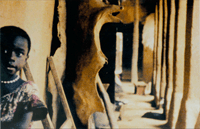
Reassemblage, 1982
Neither an ennobled (or exoticized) slice-of-life cultural documentary nor an expository thesis framed within the logic structure of an essay film, Reassemblage is, instead, what Trinh T. Minh-ha describes in her book Cinema Interval as an “interrogation” – an idiosyncratic (if not compositionally radical) approach to the ethnographic study of contemporary Senegal that seeks to […]
Mütter, 2002
Miklòs Gimes presents a fascinating, sincere, provocative, but oddly sterile portrait of his parents’ political activism and personal relationship during the turbulent and uncertain landscape of postwar Hungary in Mütter. The film opens with the 1989 national broadcast of Hungary’s official burial ceremony at the Budapest Heroes Square that included the filmmaker’s father, journalist and […]
Les Petites Couleurs, 2002
The ambassador of Switzerland, Christian Blickenstorfer and filmmaker Patricia Plattner were on hand to provide introductory remarks (along with a subsequent wine and cheese reception at the gallery) to the opening night feature, Les Petites Couleurs, a simple, effervescent, and charming comedy that centers on a beautiful hairdresser named Christelle (Anouk Grinberg) as she rebuilds […]
Jonah Who Will Be 25 in the Year 2000, 1975
Alain Tanner’s Jonah Who Will Be 25 in the Year 2000 is a thoughtful, compassionate, funny, and provocative ensemble drama on the contemporary fate of several May 68 activists as their post-radical lives converge on an idyllic suburban organic farm: a proofreader named Max (Jean-Luc Bideau) who attempts to subvert the actions of an opportunistic […]
Romeo and Juliette in the Village, 1941
Hans Trommer and Valerien Schmidely’s social realist peasant drama, Romeo and Juliette in the Village is a well-photographed, but ultimately contrived and non-cohesive tale of the failed romantic destiny of young lovers Vreneli and Sali who are separated by their families’ financially devastating legal dispute over an interstitial tract of land between their respective farms. […]