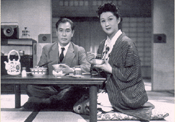
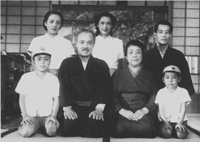
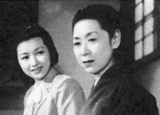
Floating Weeds, 1959

A panoramic, low angle opening montage of an idyllic Japanese coastal province defines the understated, cinematic poetry of Yasujiro Ozu: a lighthouse framed against a tranquil sea; docked boats undulating with the sweeping waves; villagers weaving lackadaisically through local shops, as much for social interaction as for commerce. A struggling, itinerant acting troupe arrives into […]
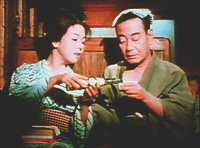
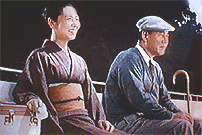
The Flavor of Green Tea Over Rice, 1950

Revisiting themes of marital complacency and mutual respect as his earlier domestic comedy What Did the Lady Forget?, The Flavor of Green Tea Over Rice demonstrates unusually dynamic camerawork a later period, postwar Ozu film, featuring several low angle tracking shots – often placed as interstitial scenes in lieu of his more familiar ‘pillow’ shots […]

Early Summer, 1951

An independent-minded 28-year old woman living in cosmopolitan, postwar Tokyo may seem immune from the societal pressures of marriage, but in Noriko’s (Setsuko Hara) environment, it is a perennially surfacing, unavoidable topic. Her father, Shukichi (IchirĂ´ Sugai), and mother, Shige (Chieko Higashiyama), are unable to retire to her uncle’s house in the provincial town of […]

The Munekata Sisters, 1950

The film follows the plight of the upper beautiful, middle-class Munekata sisters – the conservative and traditional married older sister, Setsuko (Kinuyo Tanaka) (dressed in a kimono) and the liberal minded and free-spirited younger sister Mariko (Hideko Takamine) (dressed in Western attire) – as they struggle to build a new life in postwar Tokyo away […]