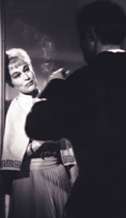
Nathalie Granger, 1972

It would seem logical to characterize Marguerite Duras’ organic, elliptical anti-melodrama Nathalie Granger as a precursor of sorts to the implosive isolation and domestic violence of Chantal Akerman’s Jeanne Dielman, 23 Quai du Commerce, 1080 Bruxelles. Both films depict a silent ritualism to the performance of domestic chores through stationary shots and disembodied framing, and […]

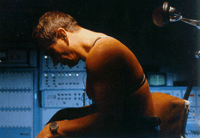
State of Weightlessness, 1994

Filmed after the dismantling of the Soviet Union at a time when the U.S. space station project (then called Freedom) that had been championed by Ronald Reagan was similarly facing its own crisis of survival after a series of deep budget cuts (partly in response to shifting political considerations and administrations), Maciej Drygas’s The State […]

Hear My Cry, 1991

Filmed during the breakup of the Soviet Union, Hear My Cry captures the essence of Maciej Drygas’s articulate and insightful film essays on the rupture between official record and human history, the impossibility of absolute truth, and the malleable nature of collective memory. The theme of revisionist history is prefigured in the film’s opening shot, […]

Gertrud, 1964

Gertrud is an emotionally restrained, yet profoundly compelling portrait of a life without compromise. Gertrud (Nina Pens Rode) is a captivating, privileged woman married to a diligent professional, Gustav Kanning (Bendt Rothe). She is disillusioned with her marriage, believing that Gustav’s political ambitions impede his complete devotion to her. On the afternoon of Gustav’s impending […]

Day of Wrath, 1943

It is 1623, Denmark, a hundred years after the Protestant reformation, and religious tide has swung from the sale of indulgences to theological fanaticism. Witchcraft trials occur with certain frequency, and any aberrant behavior is cause for denunciation. Herlof’s Marthe (Anna Svierkier), a morally weak woman who experiments with the occult, has been denounced as […]