Speaking the Language of Desire: The Films of Carl Dreyer by Raymond Carney provides an intelligent, thoughtful, and accessible analysis of Carl Theodor Dreyer’s body of work. In order to illustrate the recurring themes and distinctive visual aesthetic that pervade Dreyer’s films, Carney examines The Passion of Joan of Arc, Day of Wrath, Ordet, and […]
About: acquarello
Posts by acquarello:
Notes from Yasujiro Ozu: International Perspectives Conference – The Place of Ozu Within Japanese Film History (with panelists Richard Combs, Keiko McDonald, Tadao Sato, Mitsuhiro Yoshimoto)
Keiko McDonald Professor McDonald cited her favorite Ozu film as Floating Weeds, and examined several stylistic aspects of the film that depicted the filmmaker’s thematic distillation and visual economy, specifically: (1) the pausive function of the isolated, blue lantern shot after Komajuro’s departure (a ‘nothingness’ that signifies a great weight), and (2) the recurring shot […]
Saratan, 2005
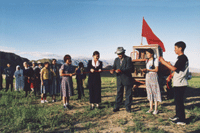
Inviting favorable comparison to Serik Aprimov’s Glastnost-era muted comedy The Last Stop (a film that ushered the Kazakh new wave), Kyrgyzstan filmmaker Ernest Abdyshaparov spins his own charming, infectious, and delightful pastoral tale on the doldrums of rural life in post Soviet-era central Asian republics in Saratan. Introducing an eclectic cast of characters – a […]
The Corporation, 2003
Appropriately presented with the sterile impersonality of a canned, droning informational video business presentation, Mark Achbar and Jennifer Abbott’s The Corporation is a wry and acerbic sprawling meditation on the psychology of a corporation as a human entity (as defined by the judicial system with respect to legal rights and responsibilities). Citing examples of blatant […]
Everyone Else, 2009
The title of Maren Ade’s quietly observed film is subtly conveyed in passing, a desire expressed by uninhibited rock publicist, Gitti (Birgit Minichmayr) to her architect boyfriend, Chris (Lars Eidinger) that their relationship will not be reduced to the banal paradigm of being like “everyone else”. But romanticism soon collides with reality for the couple […]
Tomorrow We Move, 2003
In the film’s droll, double entendred opening sequence, a breathless woman, Catherine (Aurore ClĂ©ment), speaks off camera in dulcet, anxious tone as she provides a series of guiding, seemingly appetent directions against the image of a grand piano craned precariously overhead, culminating with a stray tear that falls from her cheek at the point of […]